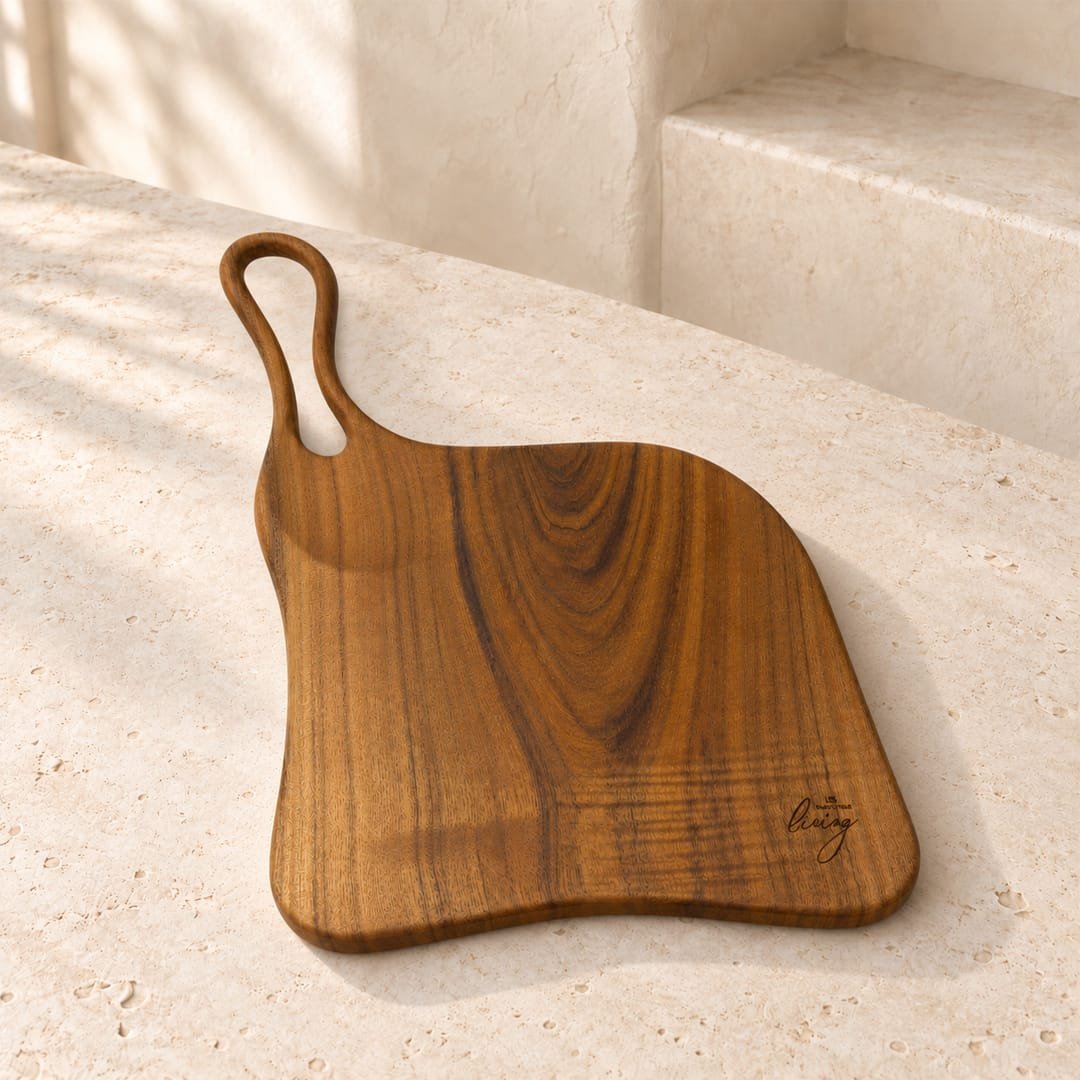
Every wooden table meets a wet glass sooner or later. The good news is that solid wood is forgiving: most everyday marks can be reduced or removed at home. The trick is to start gently and test first.
Before you start
- Identify the finish. Oiled, waxed, lacquered and polyurethane finishes behave differently. If you are unsure, ask your maker.
- Test on a hidden spot. A back edge or underside works.
- Clean the surface. Wipe with a soft, slightly damp cloth and dry it.
- Work with the grain. Always move in the direction of the wood grain.
White water rings
White rings usually mean moisture is trapped in the finish, not in the wood.
- Dry heat, gently: place a clean, dry cotton cloth over the ring and move a warm (not hot) hair dryer over it at a distance for a minute or two. Check often. The moisture often evaporates.
- Mild polish: once dry, a wood polish or wax appropriate for your finish can blend the area.
Do not use an iron or very hot tools. They can damage the finish.
Dark water rings
Dark rings mean moisture has reached the wood itself. These are harder to remove and often need light sanding and refinishing of the area. If the ring is deep or large, ask a professional.
Light surface scratches
| Finish | Gentle fix |
|---|---|
| Oiled | Rub a little wood oil along the scratch with a soft cloth, then wipe off the excess |
| Waxed | Buff with a matching wax and a soft cloth |
| Lacquer or PU | Use a wood scratch-cover product in a matching colour, then polish lightly |
Deeper scratches and dents
- Dents (wood fibres compressed): a damp cloth and gentle heat can swell them back on bare or oiled wood. Test first.
- Deep scratches: need filling, sanding and refinishing. A workshop can match colour and finish.
Dull patches
A dull area usually needs cleaning and a fresh coat of oil or wax. Wipe with a mild cleaner, dry, then apply a thin, even coat and buff.
What not to do
- Do not use harsh chemical cleaners or bleach
- Do not scrub with abrasive pads
- Do not soak the area with water
- Do not sand heavily without knowing the finish
Prevent the next one
- Use coasters and trivets
- Wipe condensation from cold glasses and bottles
- Keep a tray on the table for drinks
- Re-oil or re-wax on a schedule
When to call your maker
Call if marks are deep, rings are dark, the finish is peeling or the area is large. A workshop can renew the finish in a way that blends in. Solid wood can be sanded and refinished, which is one of its biggest advantages.
Own a Wootique piece and unsure how to treat a mark? Message our team with a photo.